Wellness
Building Psychological Resilience With Small Daily Habits
Doha's wellness community is pushing back against burnout culture with a low-cost, high-consistency approach to mental fitness — and the science backs them up.
4 min read
Wellness
Doha's wellness community is pushing back against burnout culture with a low-cost, high-consistency approach to mental fitness — and the science backs them up.
4 min read

Psychologists working in Qatar report a consistent pattern: the residents who manage stress best are not the ones signing up for expensive retreats or booking weekly therapy sessions. They are the ones doing small, deliberate things every single day. A five-minute walk before a meeting. A screen-free breakfast. Three lines written in a notebook before bed. Simple, unglamorous, effective.
That finding matters more than ever heading into the second half of 2026. Qatar's summer heat — which pushed above 44°C in Doha's West Bay district last week — forces most outdoor activity indoors between June and September, compressing social lives, disrupting exercise routines, and creating the kind of low-grade stagnation that quietly erodes mental health. Add to that the pressure of school holidays, financial planning cycles, and a workforce that skews heavily toward expats navigating family separation, and you have a city where psychological resilience is not a luxury concept. It is a practical necessity.
A 2024 WHO report on non-communicable disease burden in the Eastern Mediterranean Region found that anxiety and depressive disorders account for nearly 15 percent of total years lived with disability across Gulf Cooperation Council states. Qatar's National Mental Health Strategy, updated in 2023 and running through 2030, specifically identifies daily behavioural habits — sleep hygiene, physical movement, and social connection — as frontline interventions, not just supplements to clinical care.
The habit-stacking approach gaining traction in Doha's wellness circles draws on decades of research from behavioural science. A landmark 2009 study published in the European Journal of Social Psychology tracked 96 participants and found that new habits take an average of 66 days to become automatic — not the mythologised 21 days. The practical implication: starting small enough that you can actually sustain the behaviour across that two-month window is more important than starting ambitious. A ten-minute morning walk wins over a one-hour gym session you abandon by week three.
Stress hormones are part of the equation too. Cortisol — the body's primary stress chemical — follows a predictable daily curve, peaking shortly after waking and declining through the afternoon. Practitioners advise timing high-stakes cognitive work to the morning window, and building genuine recovery moments into early afternoon, when the body is already primed to down-regulate. Those interested in the broader hormonal picture, including the role of melatonin in sleep quality and its downstream effects on mood, should speak directly with a physician or endocrinologist rather than self-medicating.
Aspire Zone in the Aspire Park neighbourhood has become one of the most accessible daily-habit anchors in the city. Even during summer, the indoor facilities at Aspire Academy open sections to community members, and the 88-hectare park itself draws early-morning walkers from around 5 a.m., before temperatures climb. The Qatar Foundation campus in Education City hosts regular mindfulness and stress-management programming through its community outreach arm, with several workshops offered free to Qatar residents through the summer calendar.
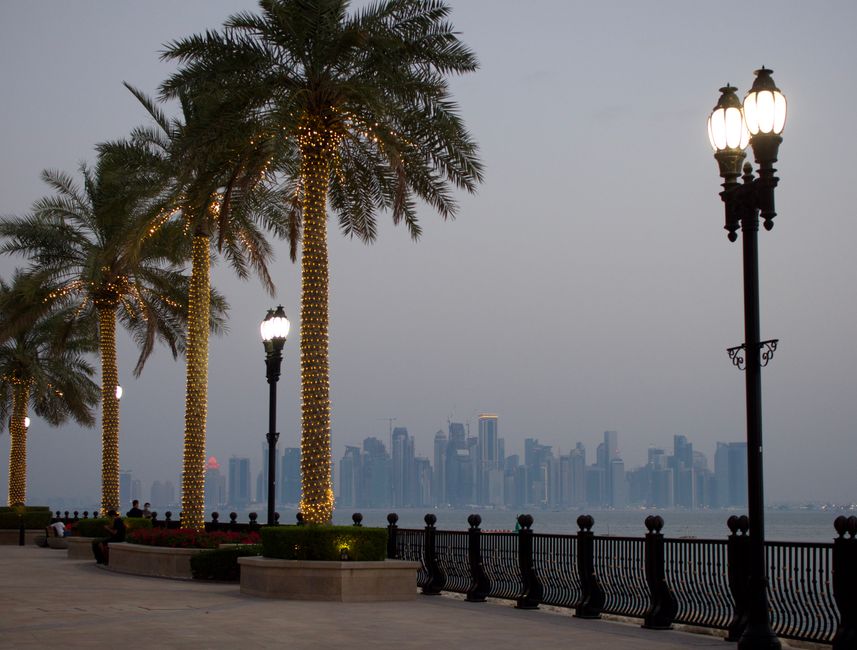
The Corniche promenade, stretching roughly seven kilometres between the Sheraton roundabout and the Museum of Islamic Art, functions as a kind of informal outdoor therapy circuit when weather permits — typically between October and May, but also in the pre-dawn hours of summer months. Mental health clinicians at Hamad Medical Corporation's psychiatry outpatient services, based at Rumailah Hospital on Al Rayyan Road, consistently recommend sustained low-intensity movement as a cornerstone of any resilience plan, not an optional extra.
For those who prefer structured support, the Cognitive Behavioural Therapy-based group programmes offered through the Primary Health Care Corporation run at several health centres across Doha, including sites in Al Wakra and Al Khor, with fees on a sliding scale for residents.
The practical starting point is deliberately modest. Choose one anchor habit — a consistent wake time, five minutes of journaling, or a short walk before reaching for a phone — and hold it for eight consecutive weeks before adding anything else. Track it on paper, not an app, to remove one more screen from the equation. Consult a licensed mental health professional at any point where stress tips from manageable into disruptive. Resilience is built in the ordinary minutes of ordinary days. Doha, this summer, has plenty of those to work with.
Wellness

Wellness

Wellness
Wellness
About this article
Published by The Daily Doha
Spread the word
Daily brief
Free, in your inbox before 7am. Weekdays.
The Daily Network — local news across Australia