Wellness
The Hidden Nature Walks Locals Love But Tourists Miss
While visitors crowd the Corniche, Doha's most dedicated walkers have quietly claimed a network of greener, quieter routes that most guidebooks never mention.
4 min read
Wellness
While visitors crowd the Corniche, Doha's most dedicated walkers have quietly claimed a network of greener, quieter routes that most guidebooks never mention.
4 min read
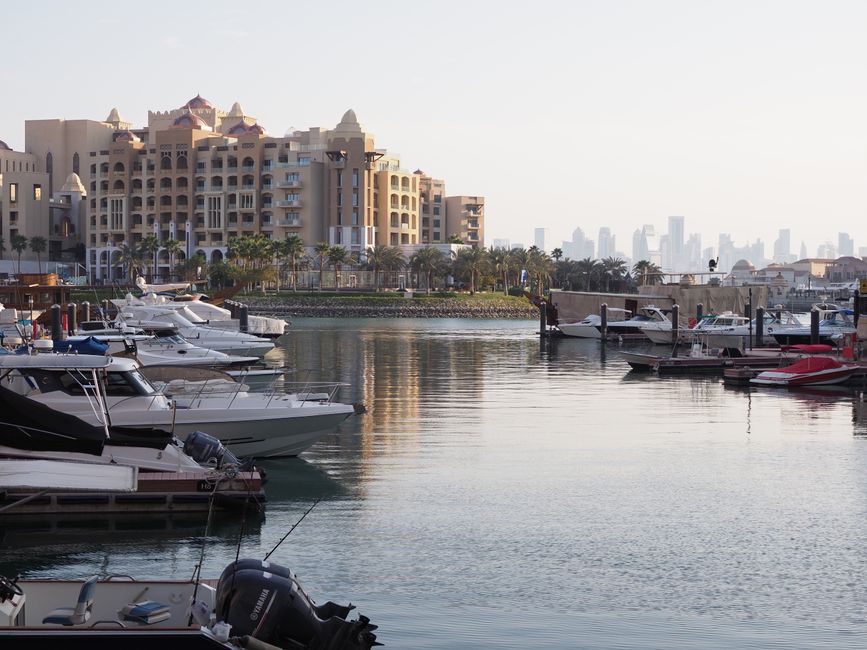
Doha has a walking culture that its Instagram-friendly waterfront doesn't fully reveal. Away from the manicured promenade between Al Bidda Park and the Museum of Islamic Art, a growing number of residents are logging serious kilometres through mangrove corridors, heritage garden loops, and limestone-edged creek paths that see a fraction of the tourist foot traffic — and none of the selfie sticks.
The shift matters right now for one straightforward reason: July. The city sits at 41°C most afternoons this week, and Qatar's wellness community has spent years refining a set of early-morning and late-evening routes engineered around shade, sea breeze, and short, loopable distances. These aren't secret in any conspiratorial sense. They're just unmarketed — passed between running clubs and neighbourhood WhatsApp groups rather than listed on official tourism portals.
Al Khor Mangrove Walk is the most discussed among regular outdoor exercisers. Located roughly 50 kilometres north of central Doha on the Al Khor Corniche, the trail edges a protected mangrove channel and runs approximately 2.3 kilometres one way. Flamingos are reliably present in the inlet between October and March, but the path itself is usable year-round before 7 a.m., when shade from the canopy holds temperatures several degrees below the open road. Entry is free. Parking is straightforward off Al Khor Street, and the site falls under the management of the Ministry of Municipality's environmental parks division, which installed new wooden boardwalk sections in early 2025.
Closer to the city, Aspire Park in Baaya — best known internationally for the 2006 Asian Games torch tower — contains a 3.5-kilometre inner loop that most visitors treat as a backdrop for photographing the stadium. Regulars know it differently: the western edge of the park, past the Aspire Zone football pitches and toward the smaller ornamental lake, is heavily tree-lined and catches a cross-breeze off Al Waab Street from around 5:30 a.m. The Qatar Athletics Federation has used the park's outer track for community fitness programmes since 2019, and the Doha Runners club — which organises free Saturday morning sessions — consistently names this corridor among its top three training venues in the city.
A third route, less discussed outside the West Bay residential community, runs along the greenbelt behind the Qatar National Convention Centre toward Al Dafna Street. It's barely 1.8 kilometres, but the mature ficus trees planted during the 2010s urban landscaping drive create a tunnel effect that walkers describe as unusually cooling for that part of the peninsula.
Qatar's Physical Activity Guidelines, updated by the Ministry of Public Health in 2024, recommend 150 minutes of moderate aerobic exercise weekly for adults — consistent with WHO standards. Survey data published by Hamad Medical Corporation in late 2024 suggested that roughly 34 percent of Doha residents who reported exercising outdoors did so before 7 a.m., a figure that climbs in June and July. The same data noted that green-space access within 800 metres of home was the single strongest predictor of whether a resident walked regularly — more influential than gym membership or app-based motivation programmes.
That finding has real infrastructure implications. Qatar's National Development Strategy 2024–2030 allocates QAR 2.1 billion to expanding urban green corridors, with a specific target of increasing walkable green-space coverage in the older residential districts of Al Rayyan and Umm Salal by 2028.
For anyone wanting to explore these routes this summer, the practical calculus is simple: go before 6:45 a.m., carry at least 750ml of water for anything over 30 minutes, and download the Qatar Cool Map app, which the planning ministry launched in March 2026 to show real-time shade coverage across 40 designated outdoor exercise zones. Wear light, breathable fabric, keep sessions under an hour in July, and check humidity forecasts the night before — anything above 75 percent humidity at dawn warrants cutting the distance by a third. And as always, speak to a local physician or sports medicine specialist at a facility like Aspetar before starting a new outdoor exercise routine in summer heat.
Wellness
Wellness
Wellness
Wellness
About this article
Published by The Daily Doha
Spread the word
Daily brief
Free, in your inbox before 7am. Weekdays.
The Daily Network — local news across Australia